
Dancers in amigasa hats moving down the street at night
What is Owara Kaze no Bon?
Owara Kaze no Bon (おわら風の盆) is a festival of dance and music held in Yatsuo, an old silk-trading town in the hills south of Toyama city, on the first three days of September every year. Its roots go back some three hundred years. The name means, roughly, "the Bon of the wind": early September is typhoon season, and the dances began as a prayer to calm the winds before the rice harvest.
It is unlike any other Japanese festival you may have seen. There are no floats being crashed together, no chanting crowds, no fireworks. Instead, lines of dancers — faces hidden beneath low woven straw hats — move through the streets in slow, precise movements, accompanied by shamisen, drums, singers, and the high, mournful sound of the kokyū, a small bowed instrument. Thousands of paper lanterns light the stone streets. The crowd watches in near silence.
Japanese travellers regularly rank it among the country's most beautiful festivals. Outside Japan it remains almost unknown — which is part of what makes it worth the journey.
Dates & schedule
The dates never change: September 1, 2 and 3, every year. That makes planning simple for 2026, 2027 and beyond.
| When | What happens |
|---|---|
| Late August (around Aug 20–30) | Zenyasai (前夜祭) — preliminary evenings. One or two districts dance each night. Far fewer visitors; a good choice if you want the dance without the crowds. |
| September 1–2 | Dancing in all eleven districts, in recent years from around 3 pm until 11 pm with a break in the early evening: processions through the streets (machinagashi), circle dances and staged performances. |
| September 3 | The final night. Dancing runs from around 7 pm until 11 pm — and after the official program ends the town does not simply stop; see below. |
| After 11 pm | The famous "unofficial" hours. Once the daytime visitors leave, dancers often continue through the small streets into the early morning, dancing for the town rather than for an audience. |
What you will see and hear
Eleven town districts each field their own troupe of dancers and musicians, wearing subtly different costumes. There are three broad styles of dance: an older harvest dance, a men's dance with sharp, angular movements drawn from farm work, and a women's dance of slow, flowing gestures. Dancers are traditionally unmarried locals aged under twenty-five, and they practice most of the year.
The music is Etchū Owara-bushi, a folk song considered one of the most difficult in Japan to sing. Listen for the kokyū — its thin, keening line above the shamisen is the sound people cannot forget, and it is the reason the festival feels closer to ceremony than to celebration.
Musicians (kokyū / shamisen) or a close-up of a dancer's amigasa hat
Where to watch
- Suwamachi Street (諏訪町本通り) — the stone-paved street counted among Japan's 100 finest roads, lit by lanterns. The most photographed setting, and the most crowded in the early evening.
- The smaller district streets — each of the eleven districts dances its own streets. Walking away from the main drag often rewards you with a procession seen almost alone.
- Stage performances — organized performances are easier to see whole, but the festival's heart is the machinagashi, the slow procession past wooden lattice houses.
- Late at night, anywhere — after the crowds leave, follow the sound of the kokyū.
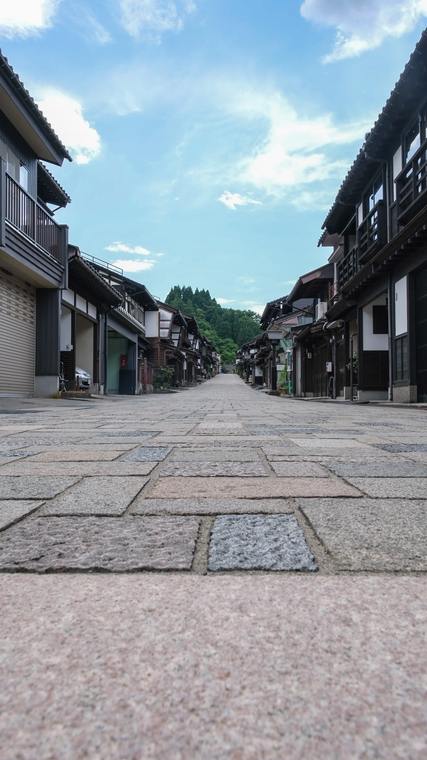
Getting to Yatsuo
By train
- From Tokyo: Hokuriku Shinkansen to Toyama (about 2 h 10 m), then the JR Takayama Line to Etchū-Yatsuo Station (about 25 minutes).
- From Kyoto / Osaka: Thunderbird express to Tsuruga, Hokuriku Shinkansen to Toyama, then as above.
- From Kanazawa or Takayama: both are within easy reach of the Toyama–Yatsuo line, which is why many travellers slot the festival into a Kanazawa–Takayama itinerary.
During the festival, trains run full and extra services are usually added. The old town is a 25-minute uphill walk from the station; shuttle services and taxis operate, but expect queues on festival nights.
By car
Roads inside the old town are closed to cars on September 1–3. Festival parking with shuttle buses is arranged on the edge of town each year — follow the official signage rather than a navigation app.
Practical tips & etiquette
- No flash photography. The dancers' faces are hidden by design; a flash ruins both the picture and the moment. Tripods in the middle of narrow streets are equally unwelcome.
- Do not touch or join the processions unless invited — some evenings end with circle dances that visitors may join.
- Eat early. Restaurants in and around the old town are few and close early even during the festival. Convenience stores sell out. Bring water.
- Wear real shoes. The town is built on a slope; you will spend hours standing and walking on stone.
- Keep quiet during the dances. The festival's power is its restraint. The crowd whispers; so should you.
- September nights can be warm or wet. A compact rain layer beats an umbrella in the packed streets.
Lantern-lit streets at night, or the festival crowds in the early evening
Day trip vs. staying overnight — the honest answer
Around two hundred thousand people visit over the three days, and nearly all of them are day-trippers. Here is what that means in practice: the last trains back to Toyama leave before midnight, and the queues for them start much earlier. The majority of visitors experience Owara at its most crowded — the early evening — and leave exactly when the festival becomes what it is famous for.
After eleven, the town changes. The tour groups are gone. The dancers come back out into the small streets, unannounced, dancing now for the town itself. You hear the kokyū from two streets away and walk toward it in the dark. This is the Owara that Japanese photographers and writers return for, and it is simply not possible on a day trip.
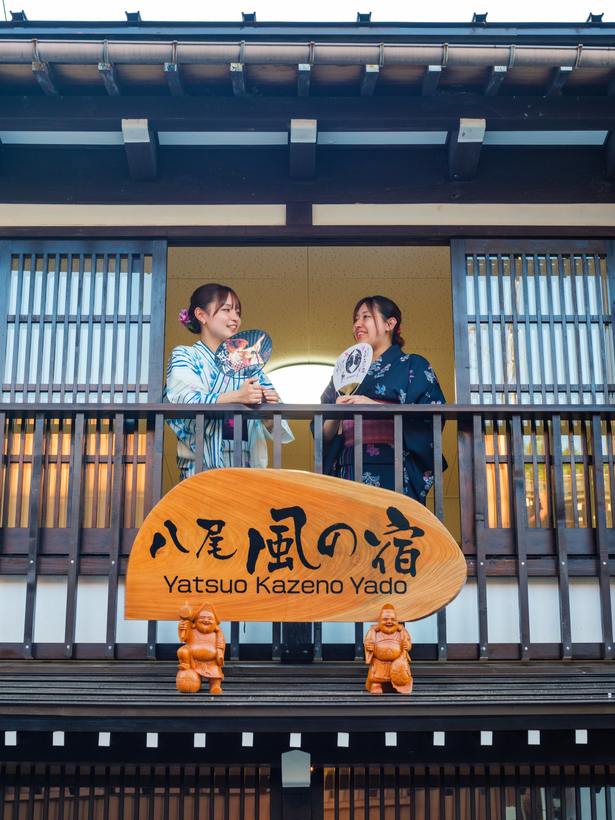
The catch: accommodation inside the old town is extremely scarce — a handful of properties in total — and it books out the moment reservations open. If you can secure a room, you sleep a three-minute walk from the dancing, watch the processions pass beneath your window, and never think about a last train.
Sleep on the procession route
Yatsuo Kazeno Yado is a 150-year-old machiya guesthouse on the old town's main street. During Owara Kaze no Bon we rent individual rooms — including rooms directly above the street the dancers pass. Bookings for the following year open on September 4th, immediately after the festival ends, and rooms go quickly.
See festival rooms & ratesFrequently asked questions
When is Owara Kaze no Bon?
September 1, 2 and 3, every year, in Yatsuo, Toyama. The dates are fixed. Preliminary evenings (Zenyasai) are held in late August.
Is it free? Do I need tickets?
The street dancing — the heart of the festival — is free, with no tickets. Some organized stage performances may be ticketed.
What happens if it rains?
Dancing pauses or is cancelled while it rains, since the silk costumes and instruments are easily damaged. If the rain passes, dancing often resumes. There is no rain date.
How crowded does it get?
Very — on the order of two hundred thousand visitors over three days, concentrated in the early evenings of September 1–3. Late nights and the Zenyasai evenings in late August are far calmer.
Can I photograph the dancers?
Yes, without flash. Keep out of the processions, keep tripods out of the narrow streets, and keep your voice down during the dances.
Can I do it as a day trip from Kanazawa or Takayama?
Yes — Toyama is on the shinkansen line and the Takayama Line connects both directions. But you will need to leave before the late-night dancing. If Owara is the reason for your trip, stay the night.
Where should I stay?
Inside the old town if you possibly can; otherwise Toyama city, 25 minutes away by train. Rooms in the old town are few and open for the following year on September 4th — enquire early.
The quiet late-night dancing, or the town at dawn after the festival
This guide is written and maintained by the hosts of Yatsuo Kazeno Yado, a machiya guesthouse on the festival's procession route. Details such as stage times and parking arrangements change year to year — always confirm against the festival's official announcements before you travel.